Termite Treatment Options Castle Hill NSW – Emergency Residential Exterminators
The longer you wait, the worse your pest infestation can get. If you suspect you have a pest problem in Castle Hill, don't delay. Call us now!

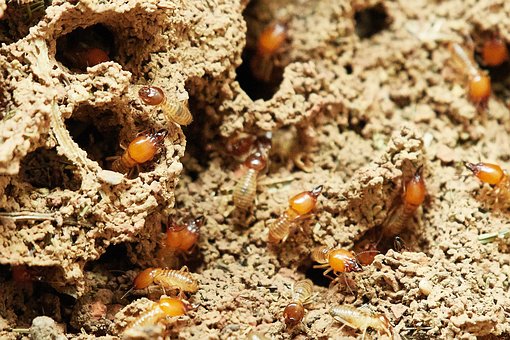 A termite assessment is the primary step in termite management
Termites and the termite swarm have been part of our natural world for millions of years. Also commonly called white ants they are resilient and relentless, being found, on average, in every 3rd property.
Australian conditions are particularly ideal for termites. The Australian standard recommends that a termite assessment be carried out every 12 months and regularly in high risk locations.
Contact us to reserve your annual Termite Assessment.
Termite baiting does not involve spraying chemicals or trenching. Stations are positioned in particular locations around your house and when termite activity is found, baits are positioned inside the existing stations. The termite bait used is non-chemical which contains an active component, so effective that only a small amount is required. Termites ingest the bait and bring it to back the nest where they share it with other termites.
 Termite dusting is the first phase of a termite treatment as it requires using active termites. Sydney’s Castle Hill Pest Controluse Termidor Dust which is non-repellent and is 95.5% food alpha cellulose, the exact same product used as the food source in the majority of the termite bait systems.
To Use Termidor Dust: Small holes are made in infested lumber or directly onto termite routes. Utilizing a small puffer, fine dust is puffed directly onto termites within the infested lumber, these holes are covered to seal the workings, to prevent any dust leaving and to decrease disturbance of the termites.
The termites will continue togo about their typical activities long enough to move the Termidor Dust to unsuspecting termites within the nest. It will normally take 3-6 weeks for the nest to be impacted by the dust.
Termite dusting however does not offer an on-going protection to a building from future termite attacks. There might be more than one termite nest within striking distance and termites are continuously establishing new nests.
This is why a termite soil treatment is critical following termite dusting.
Termite Soil Treatment: Termite soil treatments are the favored alternative for getting rid of termite invasions. Nevertheless, soil treatment does depend upon the construction design of your house and can be discussed with the professional on the day of the termite assessment.
Termite soil barrier treatments are applied to soil locations in which the structure is in contact with consisting of:
If the distance between the soil and flooring woods is greater than 400-mm the soiled locations within the subfloor are trenched and treated. In any case we usually choose to treat the whole of the subfloor. This increases surface area coverage in the subfloor and therefore increases the likelihood of termites coming into contact with Termidor.
Concrete borders are drilled at approximately 20 to 30-cm centres (1.2-cm holes), injected and re-concreted, as if absolutely nothing occurred.
These locations could consist of:.
Repellent: Repellent termiticides work by developing a termite harmful barrier around a home. The treated locations end up being a no-go zone for termites. In order to work correctly, these termiticides need to be applied in an unbroken zone around the structures. This can be difficult to attain due to the construction and design of your house and if there is concrete against the house. Repellent termiticides are mainly used throughout the pre-construction phase.
Non-repellent: With non-repellent termiticide, termites are unable to detect that a location has been treated and thus do not avoid the treated area. When the termites travel through the termiticide, they make contact with the active component, return to the nest and infest the unsuspecting termites, which will result in their extermination.
Castle Hill Pest Control offers a 5-year warranty on non-repellent treatment. Conditions do apply and are subject to the house structure and design.

The monitoring and baiting is a complete system that includes
Termite baiting systems work effectively, and when a nest is removed or controlled, the termite monitoring stations will continue to protect your house against new termite activity. The estimated time of nest elimination is 3– 6 months.
For the most part your house is the most costly item you may own; don’t let it be gnawed by termites!
Trying to find termite control services in Castle Hill and Baulkham Hills, Glenhaven, Cherrybrook, West Pennant Hills, North Rocks, Bella Vista, Kellyville, Winston Hills, Beecroft, Dural? Call us today!
